What Is AI Automation? A Practical Guide for Business Owners
“AI automation” gets thrown around so often it's started to mean everything and nothing at once. A chatbot gets called AI automation. So does a spreadsheet macro, sometimes. If you're trying to figure out whether your business actually needs it, or whether you already have it and don't know it, here's a straight answer.

“AI automation” gets thrown around so often it's started to mean everything and nothing at once. A chatbot gets called AI automation. So does a spreadsheet macro, sometimes. If you're trying to figure out whether your business actually needs it, or whether you already have it and don't know it, here's a straight answer.
Key Takeaways
- AI automation combines AI (machine learning, NLP, computer vision) with automation tools to handle tasks involving judgment or unstructured data
- Traditional automation and RPA follow fixed rules and break when the input varies
- AI automation can read a document, understand context, and decide what to do next, not just move a file from A to B
- Most real business systems combine both: rules where rules work, AI where judgment is genuinely needed
- Not every business problem needs AI, some are better and cheaper solved with plain automation
What Is AI Automation, Exactly?
AI automation is the use of artificial intelligence, machine learning, natural language processing, and computer vision, combined with automation tools, to carry out business tasks that would normally require a person to read, interpret, or decide something. Plain automation runs a fixed set of steps. AI automation adds a layer that can handle variation: different document formats, different phrasing in a customer message, different edge cases that a rules-only system would simply fail on.
The short version: automation does the task. AI is what lets the system understand what it's looking at before it acts.
AI Automation vs. Traditional Automation (and RPA)
This is where most of the confusion actually lives, so here's a concrete example.
Traditional automation, or RPA (robotic process automation), can move every email with “invoice” in the subject line into a folder. That's genuinely useful. But it can't open the invoice, read the vendor name, or check the amount. It follows the rule it was given, and nothing more.
AI automation opens that same invoice, extracts the vendor, amount, and due date, checks it against what's expected, and routes it to the right person for approval, all without a human doing the reading. The difference isn't speed. It's that one system can handle a document it's never seen before, and the other can't.
How AI Automation Actually Works
Most AI automation follows a simple pattern: sense, decide, act.
- ●Sense: the system takes in raw input, a document, an email, a customer message, a data feed
- ●Decide: an AI model interprets that input, understands context, and figures out what should happen next
- ●Act: the system executes the next step, routing, updating a record, flagging an exception, drafting a response
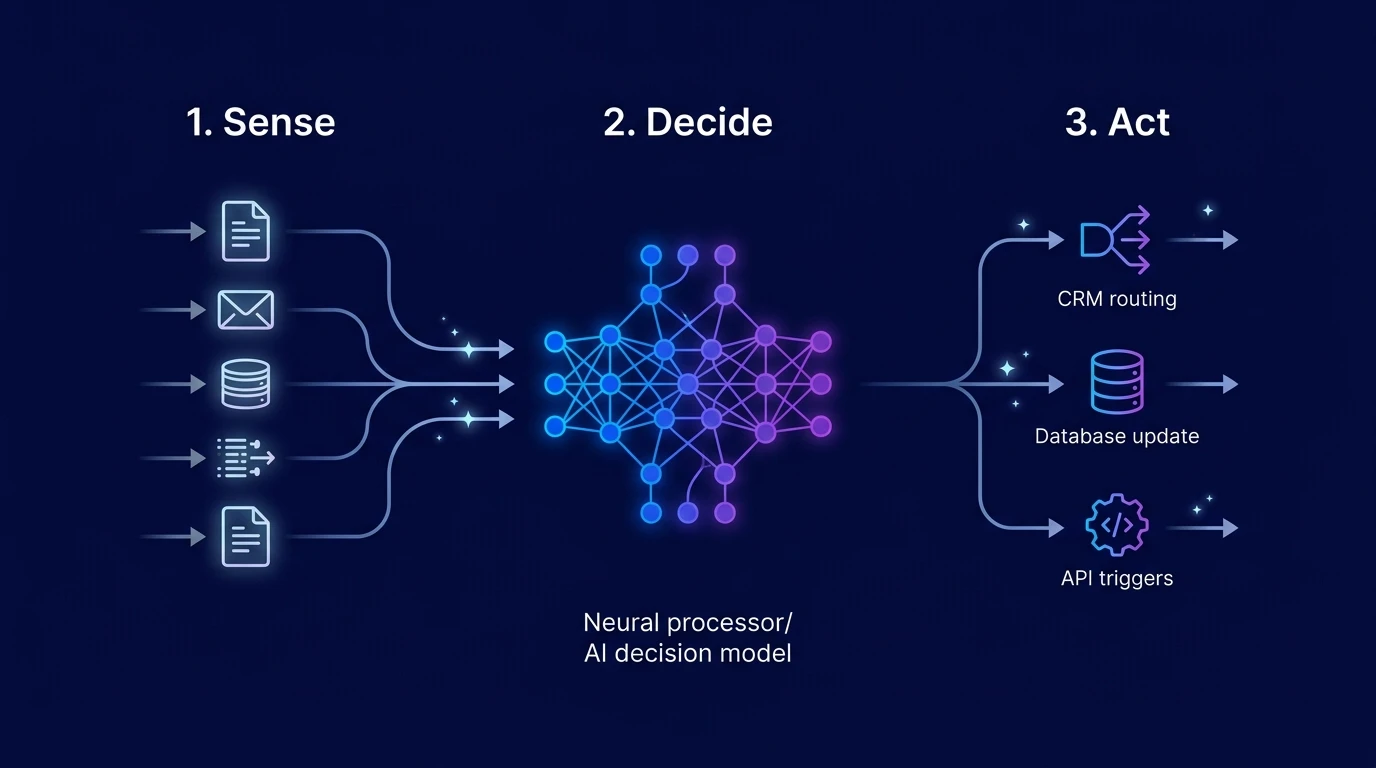
Figure 1: The Sense, Decide, Act architecture of modern AI automation pipelines
Traditional automation only really has the “act” step, and only for exactly the situations someone anticipated in advance. AI automation adds real interpretation in the middle, which is what lets it handle situations nobody explicitly programmed for.
Real Examples of AI Automation in Business
A few concrete examples make this less abstract:
- ●Document processing: extracting data from invoices, purchase orders, or inspection reports instead of someone retyping them
- ●Customer support: understanding what a customer is actually asking, in their own words, instead of matching exact keywords
- ●Operations forecasting: spotting a demand or maintenance pattern in historical data that a fixed report would never surface
- ●Internal search: answering “which orders are delayed and why” in plain language instead of someone exporting five spreadsheets
Do You Actually Need AI Automation, or Just Automation?
Not every problem needs AI. If a task is genuinely fixed and predictable, always the same steps, always the same format, plain automation or RPA solves it for less money and less complexity. AI automation earns its cost when the task involves reading something that varies, understanding intent, or making a judgment call a rigid rule can't cover.
The honest way to figure out which one you need: map the actual task first. If you can write the rule in one sentence with no exceptions, you probably don't need AI for it yet.
Frequently Asked Questions
No. RPA (robotic process automation) follows fixed, predefined rules and breaks when the input changes. AI automation adds machine learning and language understanding on top, often alongside RPA, so the system can handle input that varies instead of only exact matches.
More from the Zapledge Blog

AI Automation Cost in India: 2026 Pricing Guide
See real 2026 pricing for AI automation in India, from single workflows to full custom builds, plus what actually drives the cost up or down.

5 Signs Your Business Is Losing Time to Manual Workflows
IDC research shows businesses lose 20-30% of revenue to process inefficiencies. Here are 5 signs your manual workflows are costing you more than time.

AI Automation vs. Traditional Software: What's Actually Different?
Every software vendor calls their product “AI-powered” now, which makes the label almost meaningless. But there's a real, concrete difference between traditional software and AI software, and understanding it matters before you decide which one your business actually needs.
Figuring Out Where AI Automation Actually Fits Your Business
The honest next step isn't picking a tool, it's mapping the actual bottleneck in your business and figuring out whether it needs AI or just plain automation. That's the starting point Zapledge uses with every client, before recommending anything.
Get a Free Consultation →