Tender enquiryBOQ & cost codesEstimate locked
01
Lead & Estimation
A lead or tender enters the system, and estimation and quotation are built against a consistent process instead of a one-off spreadsheet.
Projects, sites, and procurement connected, built to work the way your crews actually work.
Zapledge builds the software, automation, and AI systems that connect estimation, project planning, procurement, site execution, and billing for construction businesses. Every build is designed around how site teams actually capture information, quick photo updates and simple daily logs, not complex forms nobody in the field will use.
Get Free ConsultationA construction project runs on two parallel tracks: what's happening on site, and what's happening in the office, estimation, procurement, billing. What usually slows a project down isn't the work itself, it's these two tracks losing sync. Here's where we connect them.
One connected construction operating layer
Projects, phases, tasks, milestones, budgets, dependencies, and progress tracking, so project status is one system, not five spreadsheets and a phone call.
Together, these five pillars connect the office and the site into one system, so a project's real status is always visible, not reconstructed from memory at the weekly meeting.
Together, these five pillars connect the office and the site into one system, so a project's real status is always visible, not reconstructed from memory at the weekly meeting.
Construction has a well-known resistance-to-change problem, and it's usually not about the software's capability, it's about whether the people using it every day actually will.
Site capture is built to be fast: photos, short logs, and simple status updates from a phone, not long forms designed for a desk. We also scope training and onboarding into every engagement, because a system your crews won't use doesn't save anyone time, no matter how capable it is on paper.
Quick site photos, voice notes, and tap-based daily logs designed for fast updates from the field.
Site progress immediately updates procurement, subcontractor approvals, and billing milestones.
Hands-on crew training and supervisor coaching included in every rollout to ensure permanent adoption.
Automated daily site report consolidation, AI-summarized site updates, subcontractor variation approvals, and milestone budgets tracked against real progress.
These are the problems we hear most often from project managers, site supervisors, and commercial teams before we start working together, and how we address each one.
Each of these fixes plugs into the same underlying system, so solving one bottleneck doesn't create a new spreadsheet living outside it.
MODULES
A typical construction engagement draws from these module groups, scoped to what your business actually needs rather than deployed all at once.
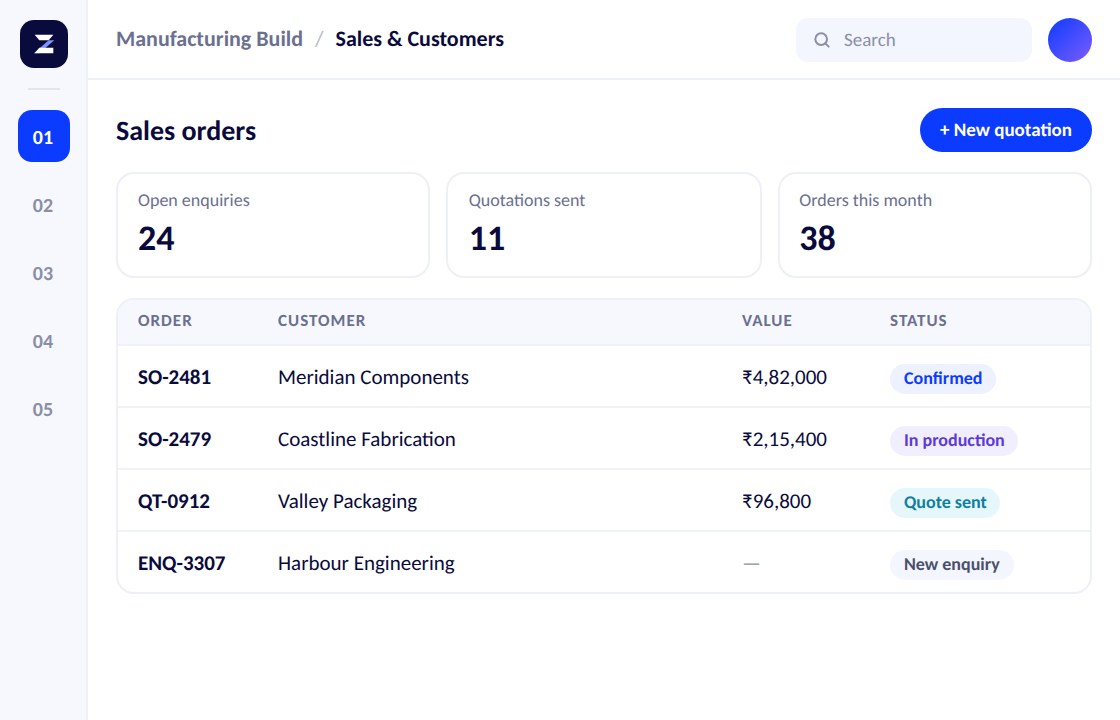
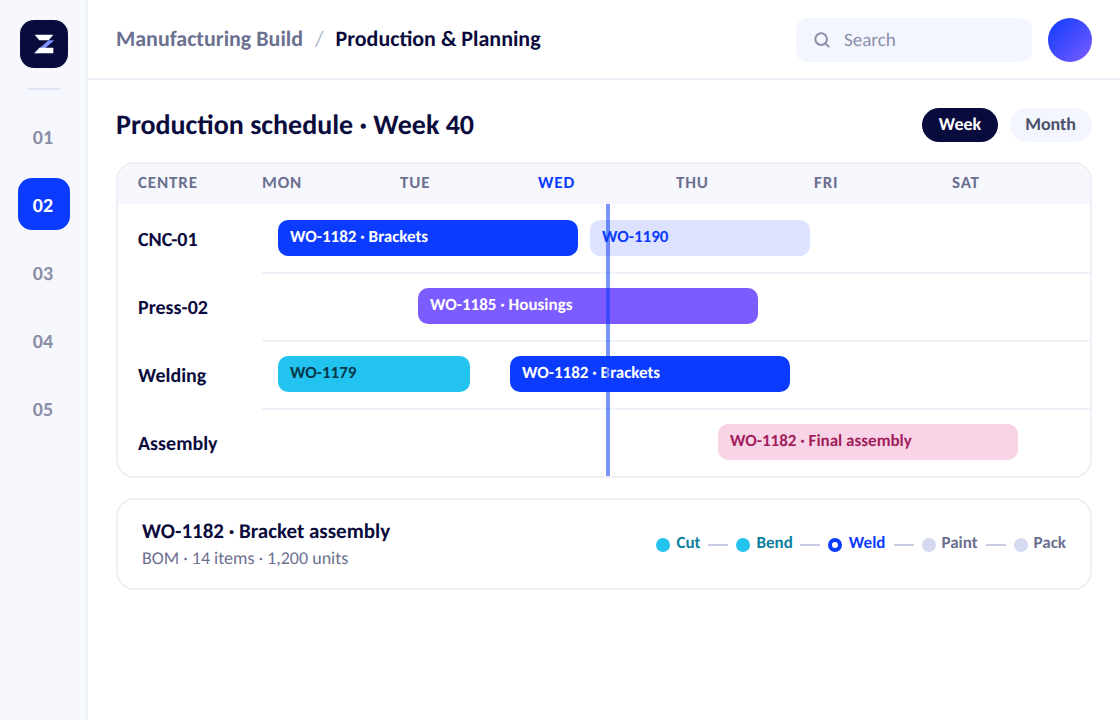
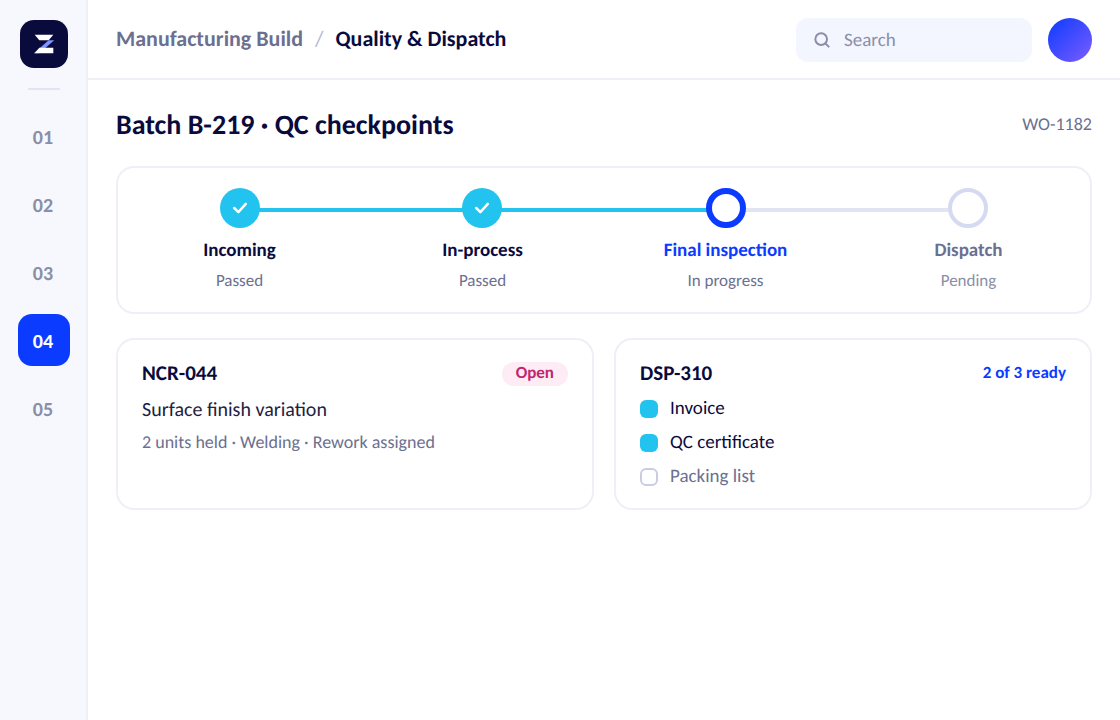
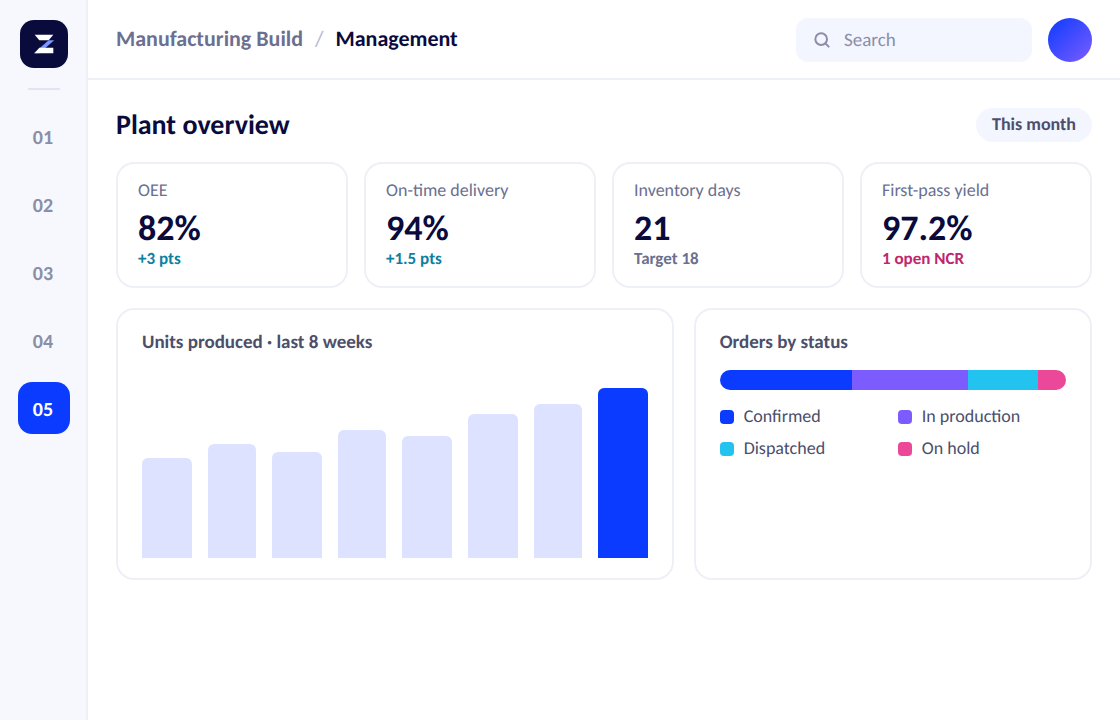
BOQ and quantity management, procurement, vendor and subcontractor management, and material and equipment tracking, covering the full supply side of a project.
We map this against how your projects actually run, from bid to handover, before we build anything.
A lead or tender enters the system, and estimation and quotation are built against a consistent process instead of a one-off spreadsheet.
A won bid converts directly into a project, with budgets, phases, and milestones set up from the estimate rather than rebuilt from scratch.
Project planning and procurement run in parallel, with RFQs and purchase orders tied to the actual project schedule.
Daily logs, labour, equipment, and site photos are captured from the field, giving the office real-time visibility into progress.
Inspections and quality and safety checks are logged as part of the normal site workflow, not a separate compliance exercise.
Subcontractor bills and variations move through a documented approval workflow, reducing disputes at final account.
Project closeout draws on the full documented history, photos, approvals, variations, rather than being reassembled after the fact.
Tell us where site updates, procurement, or billing is slowing your team down. We'll map the process and show you exactly where automation and AI can help, built around how your crews actually work.